

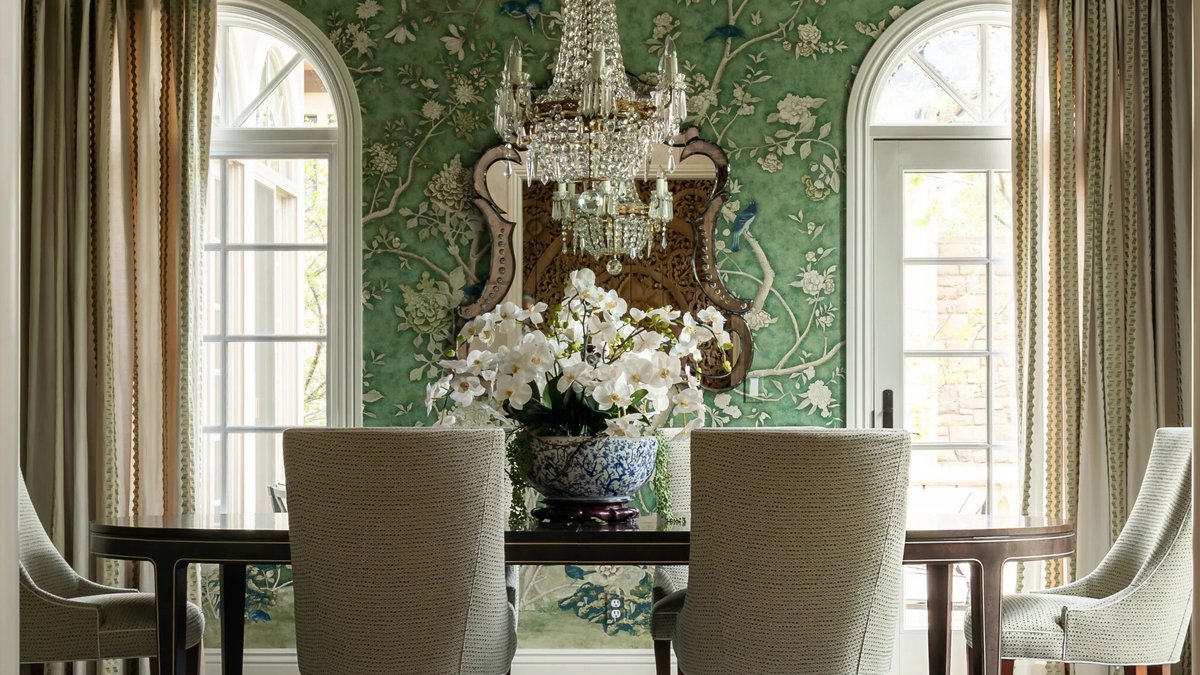
Designers Jess Knauf, Jodi Cook Monts and Tory Bond each offered their own take on maximalism.
Knauf’s view: curated fearlessness
Knauf described maximalism as “an expression of fearlessness in design.” She said the style rejects the sameness of copy‑paste interiors, opting instead for “individuality, richness and more unique and handmade pieces.” According to her, color, pattern and contrast are not random but “intentional, expressive choices.” She emphasized that maximalism is not about excess for its own sake; it relies on careful curation of collections, antiques and personal artifacts to make spaces feel “deeply personal rather than interchangeable.”
Related: Cherry Creek Arts Festival Turns 35
Cook Monts on layered sensory impact
Cook Monts framed maximalism as “the practice of implementing layers of design elements… to create a rich sensory experience via visual stimulation.” She noted that designers often employ exaggerated color, scale, pattern or texture, resulting in “visually abundant” environments. In her own projects, she frequently combines “color‑drenching, the layering of patterns, and scale.” An example she cited paired a striped floor tile with a floral wallpaper sharing a similar palette, while another illustration featured an oversized pendant lamp beside a dark, moody bathtub.
While Cook Monts’ description focuses on visual density, her approach remains restrained. She said the style “whispers conspiratorially rather than shouting from the rooftops,” suggesting a subtle balance between abundance and harmony.
Bond’s emphasis on depth and curation
Bond observed that maximalism feels like “the pendulum swinging” after years of restrained interiors dominated by all‑white kitchens and gray tones. For her, the movement is less about adding more items and more about adding depth. She explained that the best spaces remain “layered but edited,” avoiding clutter while feeling curated.
Related: Pool Resurfacing Costs Explained: What Homeowners Should Expect
In practice, Bond avoids piling pattern on pattern. Instead, she mixes old and new, incorporates travel‑sourced pieces, and selects “unexpected accessories” that break predictability. She highlighted the importance of finding “that one piece that’s a little unusual or special,” which gives a room its point of view. Color, she said, is the glue that keeps the layers feeling cohesive.
Design continues to evolve.


